
YAG Laser Capsulotomy
OverView
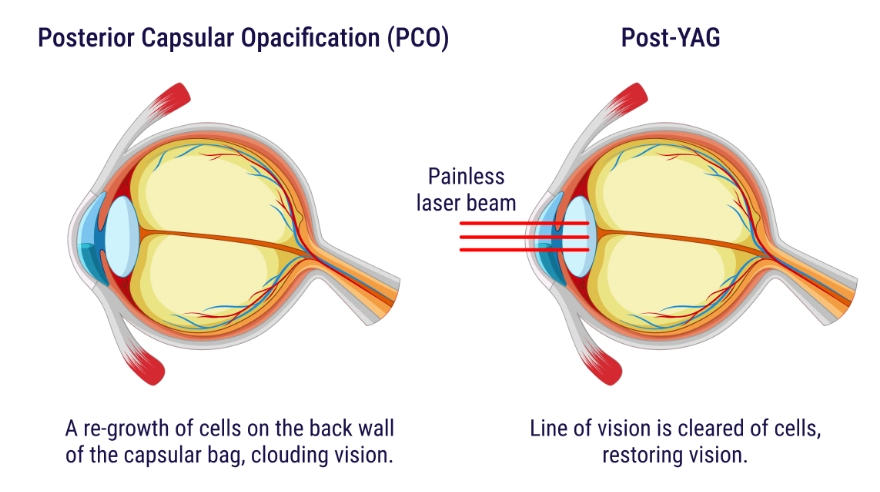
YAG laser capsulotomy is a non-invasive procedure used to treat a common complication that can occur after cataract surgery, known as posterior capsule opacification (PCO). Often referred to as a “secondary cataract,” PCO occurs when the back part of the lens capsule (which holds the artificial lens in place after cataract surgery) becomes cloudy, leading to a gradual decline in vision.
Understanding Posterior Capsule Opacification (PCO)
What is PCO?
- After cataract surgery, the natural lens is removed, and an artificial intraocular lens (IOL) is implanted. The lens capsule, a clear membrane that originally held the natural lens, is left intact to support the IOL. Over time, this capsule can become cloudy due to the proliferation of residual lens epithelial cells, leading to blurred or hazy vision, glare, and difficulties with night vision.
How Common is PCO?
- PCO is the most common long-term complication of cataract surgery, affecting approximately 20-30% of patients within five years post surgery.
The YAG Laser Capsulotomy Procedure
YAG laser capsulotomy is a quick, painless, and highly effective procedure that restores vision by creating an opening in the clouded capsule, allowing light to pass through to the retina without obstruction.
Preparation:
Eye Examination:
- The ophthalmologist will perform a thorough eye examination to confirm the diagnosis of PCO and determine if YAG laser capsulotomy is necessary.
Pupil Dilation:
- Eye drops are used to dilate the pupil, providing the surgeon with a clear view of the lens capsule.
Anesthesia:
- A topical anesthetic in the form of eye drops is administered to numb the eye and prevent discomfort during the procedure.
The Procedure:
Laser Application:
- The patient is seated at a laser machine, similar to the one used for a routine eye examination. The YAG laser emits short bursts of light energy that create a small, central opening in the cloudy capsule behind the IOL. This opening allows light to pass through to the retina, restoring clear vision.
Duration:
- The procedure typically takes just a few minutes and is performed on an outpatient basis.
Post-Procedure Care:
Immediate Effects:
- Most patients experience an immediate improvement in vision, although some may notice floaters (small dark spots in the vision) for a short time afterward.
Eye Drops:
- Anti-inflammatory eye drops may be prescribed to reduce the risk of inflammation after the procedure.
Activity Restrictions:
- Patients can usually return to their normal activities immediately, although they should avoid strenuous activities for a short period.
Follow-Up:
- A follow-up visit is typically scheduled to ensure that the eye is healing well and that the procedure was successful.
Benefits of YAG Laser Capsulotomy
Restoration of Vision:
- The primary benefit of YAG laser capsulotomy is the rapid restoration of clear vision, often improving visual acuity to the level achieved immediately after the original cataract surgery.
Non-Invasive:
- The procedure is non-invasive, painless, and does not require an incision or prolonged recovery time.
Long-Term Results:
- Once the posterior capsule is treated with the YAG laser, it is unlikely to become cloudy again, making the results permanent.
Risks and Complications
While YAG laser capsulotomy is generally safe and effective, there are some potential risks and complications, including:
Increased Intraocular Pressure:
- In some cases, the procedure can cause a temporary rise in intraocular pressure, which may need to be managed with medication.
Retinal Detachment:
- Although rare, there is a small risk of retinal detachment following the procedure. Patients are advised to report any sudden flashes of light, f loaters, or loss of vision to their ophthalmologist immediately.
Macular Edema:
- Swelling of the macula (the central part of the retina responsible for detailed vision) can occur, leading to blurry vision. This is typically managed with anti-inflammatory medications.
Damage to the IOL:
- There is a slight risk of damage to the intraocular lens during the procedure, which may require further intervention.
Conclusion
YAG laser capsulotomy is a highly effective and low-risk procedure that can significantly improve vision for patients experiencing posterior capsule opacification after cataract surgery. By creating a small opening in the cloudy lens capsule, the laser allows light to reach the retina unimpeded, restoring clarity and improving the quality of life for many patients. As with any medical procedure, it is important for patients to discuss the potential risks and benefits with their ophthalmologist to make an informed decision.

USEFUL LINKS
SANKALP HOSPITALS PVT. LTD.
Vijay Smruti, Town Hall Circle, Jamnagar - 361 001 (Gujarat) INDIA
sankalphospitals@gmail.com
0288 2553435
© 2024 Sankalp Hospitals Pvt. Ltd.