Pterygium Surgery
OverView
Pterygium surgery is a procedure performed to remove a pterygium, which is a benign growth of conjunctival tissue that extends from the white part of the eye (sclera) onto the cornea. Pterygia are often associated with exposure to ultraviolet (UV) light, wind, dust, or other environmental factors, and they can cause discomfort, redness, and, in some cases, vision impairment.
What is a Pterygium?
A pterygium (plural: pterygia) is a wedge-shaped growth of fibrovascular tissue that develops on the eye. It typically starts on the nasal side (closest to the nose) of the eye and can gradually grow toward the cornea. In the early stages, a pterygium may be small and asymptomatic, but as it progresses, it can cause:
Irritation and Redness:
- The growth can cause a gritty or burning sensation in the eye.
Cosmetic Concerns:
- The visible growth can be unsightly.
Vision Disturbance:
- If the pterygium extends onto the cornea, it can distort the shape of the cornea, leading to astigmatism and blurred vision.
Restricted Eye Movement:
- In severe cases, large pterygia can limit the eye's movement.
Indications for Pterygium Surgery
Surgery is typically recommended when:
- The pterygium grows large enough to threaten vision by approaching the central cornea.
- The patient experiences significant discomfort or recurrent inflammation that is not well controlled with medications.
- There are cosmetic concerns or the pterygium's appearance is bothersome to the patient.
- The pterygium causes chronic redness and irritation that does not respond to other treatments.
Types of Pterygium Surgery
Several surgical techniques are used to remove a pterygium, with the goal of excising the growth and minimizing the risk of recurrence.
Bare Sclera Technique:
Procedure:
- The simplest method involves removing the pterygium and leaving the underlying sclera (white part of the eye) exposed.
Post-Procedure:
- The sclera heals over time, but this technique has a higher recurrence rate compared to other methods.
Benefits:
- Quick and straightforward.
Risks:
- High recurrence rate, often requiring additional surgery.
Conjunctival Autograft:
Procedure:
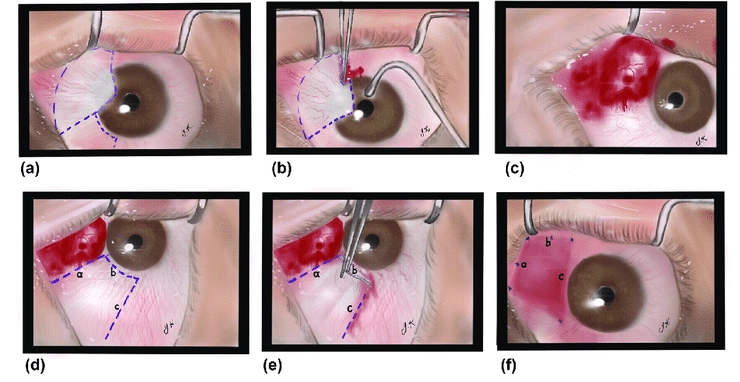
- After removing the pterygium, a piece of conjunctival tissue from another part of the same eye (usually the upper part) is transplanted to cover the exposed sclera. The graft is secured using stitches, fibrin glue, or a combination of both.
Post-Procedure:
- The graft integrates into the surrounding tissue, reducing the risk of recurrence.
Benefits:
- This technique significantly lowers the risk of pterygium recurrence and provides a more natural appearance after healing.
Risks:
- Possible complications include graft displacement, infection, and scarring, but these are relatively rare.
Amniotic Membrane Transplantation:
Procedure:
- After pterygium removal, an amniotic membrane (donated tissue from the placenta) is used to cover the area. The membrane promotes healing and reduces inflammation.
Post-Procedure:
- The amniotic membrane dissolves over time, leaving behind healthy tissue.
Benefits:
- This technique is often used for larger or recurrent pterygia and can reduce inflammation and scarring.
Risks:
- Potential complications include infection and inflammation, though these are uncommon.
Adjunctive Therapies:
Mitomycin C:
- An anti-cancer drug sometimes used during surgery to prevent recurrence by inhibiting the growth of fibrovascular tissue.
Radiation Therapy:
- In rare cases, low-dose radiation may be used post operatively to reduce the risk of recurrence, especially in patients with a history of recurrent pterygia.
Post-Operative Care and Recovery
Eye Protection:
- Patients are usually advised to wear protective eyewear, especially when outdoors, to shield the eyes from UV light, dust, and wind.
Eye Drops:
- Post-operative care includes the use of antibiotic and anti-inflammatory eye drops to prevent infection and reduce inflammation. Lubricating eye drops may also be recommended to alleviate dryness.
Activity Restrictions:
- Patients should avoid activities that could expose the eye to dust, wind, or physical trauma during the recovery period. Swimming should be avoided for at least a few weeks.
Follow-Up Visits:
- Regular follow-up appointments are necessary to monitor healing and detect any signs of recurrence.
Risks and Complications
While pterygium surgery is generally safe, there are potential risks and complications, including:
Recurrence:
- Despite surgical removal, pterygia can recur, especially if protective measures are not taken post-surgery. Recurrence is more likely with the bare sclera technique.
Infection:
- Though rare, there is a risk of infection, which can be treated with antibiotics.
Graft Displacement
- In the case of conjunctival autograft surgery, the graft may shift or become displaced.
Scarring:
- Some patients may develop scar tissue at the site of surgery, which could affect vision or the eye's appearance.
Astigmatism:
- Surgical manipulation of the cornea can induce or worsen astigmatism, a condition where the cornea’s shape leads to distorted vision.
Conclusion
Pterygium surgery is an effective treatment for removing pterygia and alleviating associated symptoms, such as irritation, redness, and vision distortion. The choice of surgical technique depends on the size and location of the pterygium, as well as the patient’s overall health and preferences. Advances in surgical methods, particularly the use of conjunctival autografts and amniotic membrane transplants, have significantly reduced the risk of recurrence, making the outcomes of pterygium surgery more predictable and successful. Proper post-operative care, including the use of protective eyewear and adherence to follow-up visits, is essential for a successful recovery and to minimize the chances of recurrence.

QUICK LINKS
USEFUL LINKS
SANKALP HOSPITALS PVT. LTD.
Vijay Smruti, Town Hall Circle, Jamnagar - 361 001 (Gujarat) INDIA
sankalphospitals@gmail.com
0288 2553435
© 2024 Sankalp Hospitals Pvt. Ltd.