
Cataract Surgery
OverView
Cataract surgery is a common and highly effective procedure to remove a cloudy lens from
the eye and replace it with a clear artificial lens. Cataracts, which develop as a natural part of
aging, cause the eye’s lens to become opaque, leading to blurred vision, glare, and difficulty
seeing at night. Cataract surgery restores clear vision by removing the clouded lens.
When Is Cataract Surgery Needed?
Cataract surgery is typically recommended when cataracts interfere with daily activities, such
as reading, driving, or recognizing faces. The decision to undergo surgery is based on the
severity of vision impairment and how it affects the patient’s quality of life.
The Procedure
Cataract surgery is usually performed on an outpatient basis and is one of the most common
and safe surgeries worldwide. Here’s a step-by-step overview of the procedure:
Pre-Surgery Preparation:
Assessment:
- Before the surgery, the eye surgeon conducts a thorough eye examination to measure the size and shape of the eye. This helps in selecting the appropriate type and power of the artificial lens (intraocular lens or IOL).
Medication:
- Patients may be prescribed antibiotic eye drops to prevent infection. On the day of the surgery, the eye is dilated with special eye drops.
Anesthesia:
- Local anesthesia is typically used to numb the eye, and the patient may receive a mild sedative to help relax. The patient remains awake during the procedure.
Surgical Procedure:
Incision:
- A small incision is made at the edge of the cornea, the clear front part of the eye.
Lens Removal:
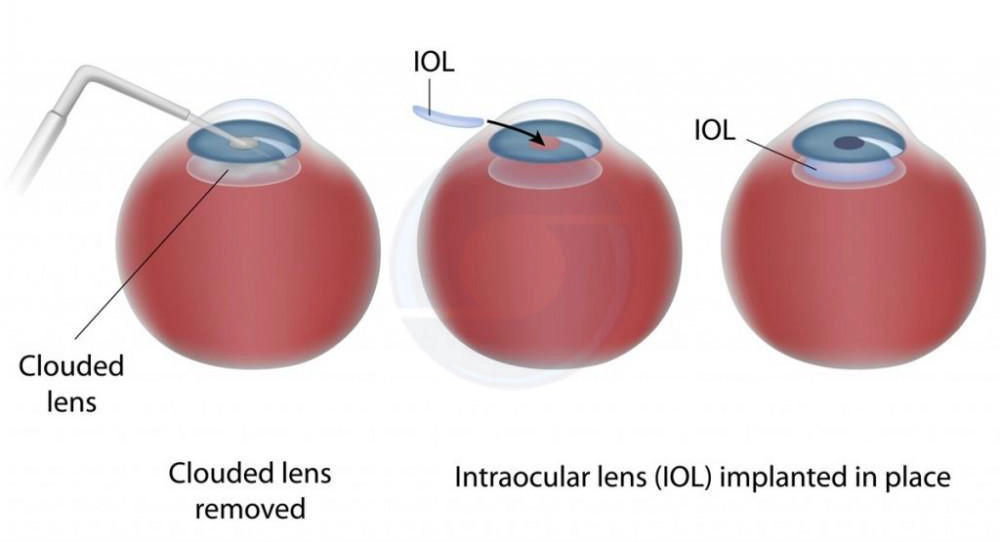
- The most common technique is phacoemulsification. In this method, a tiny probe that emits ultrasound waves is inserted through the incision. The ultrasound breaks up the cloudy lens into small pieces, which are then gently suctioned out of the eye.
Intraocular Lens (IOL) Implantation:
- After the cataract is removed, a clear artificial lens (IOL) is inserted through the same incision. The IOL is usually made of plastic, silicone, or acrylic and is designed to focus light onto the retina, much like the natural lens. It unfolds into position within the eye.
Closing the Incision:
- The incision is so small that it typically heals on its own without the need for stitches. A protective shield may be placed over the eye to protect it after surgery.
Post-Surgery Care:
Recovery:
- Most patients can go home a few hours after the surgery. Vision usually begins to improve within a few days, although it may take a few weeks to fully stabilize.
Eye Drops:
- Patients are prescribed antibiotic and anti-inflammatory eye drops to prevent infection and reduce inflammation. It's crucial to follow the prescribed regimen.
Activity Restrictions:
- Patients are advised to avoid strenuous activities, heavy lifting, and bending over for a few weeks. They should also avoid rubbing their eyes and follow any specific instructions from their doctor.
Follow-Up Visits:
- The doctor will schedule follow-up appointments to monitor the healing process and ensure there are no complications.
Types of Intraocular Lenses (IOLs)
There are different types of IOLs available, tailored to the patient’s needs:
Monofocal IOLs:
- Provide clear vision at one distance, typically for distance vision. Glasses may still be needed for reading.
Multifocal IOLs:
- Provide clear vision at multiple distances, reducing the need for glasses.
Toric IOLs:
- Correct astigmatism in addition to cataracts.
Risks and Complications
Cataract surgery is generally very safe, but as with any surgery, there are potential risks, including:
- Infection
- Inflammation
- Swelling
- Retinal detachment (rare)
- Posterior capsule opacification (PCO), also known as a "secondary cataract," which may occur months or years after the surgery and can be treated with a simple laser procedure.
Conclusion
Cataract surgery is a highly effective way to restore vision and improve quality of life for individuals with cataracts. Advances in surgical techniques and IOL technology have made
the procedure safer and more successful, with most patients experiencing significant improvement in their vision shortly after surgery. With proper care and follow-up, cataract surgery offers a permanent solution to the cloudy vision caused by cataracts.

QUICK LINKS
USEFUL LINKS
SANKALP HOSPITALS PVT. LTD.
Vijay Smruti, Town Hall Circle, Jamnagar - 361 001 (Gujarat) INDIA
sankalphospitals@gmail.com
0288 2553435
© 2024 Sankalp Hospitals Pvt. Ltd.