Laser Photocoagulation
OverView
Laser photocoagulation is a widely used ophthalmic procedure that employs a laser to treat various eye conditions, particularly those affecting the retina. The procedure is used to seal or destroy abnormal blood vessels, treat retinal tears, and reduce the risk of vision loss in conditions like diabetic retinopathy, macular edema, and retinal vein occlusion.
How Laser Photocoagulation Works
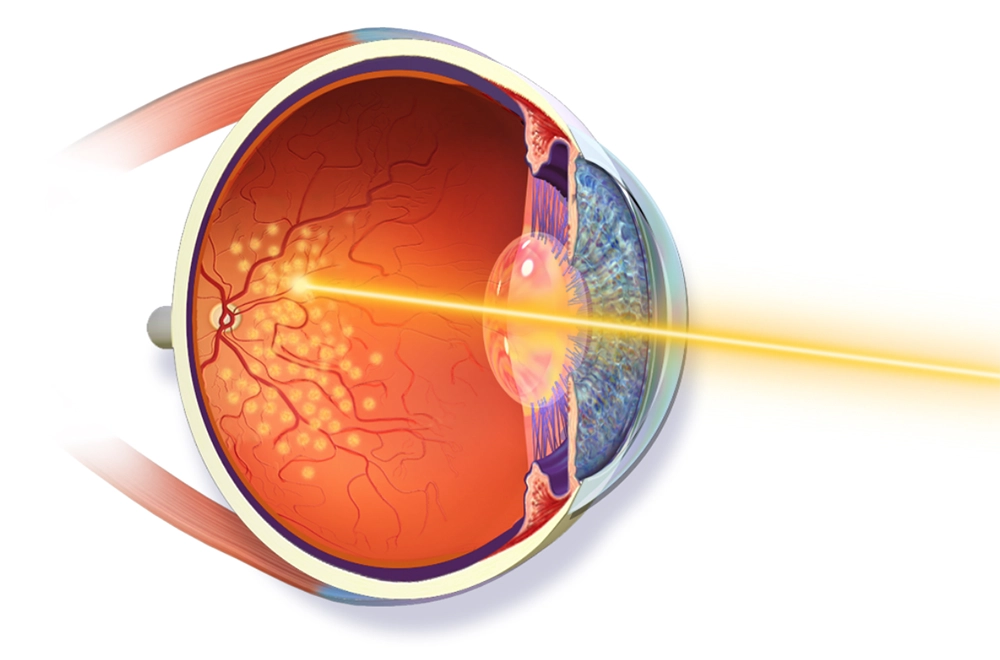
Laser photocoagulation involves the use of a focused beam of light (laser) to create a thermal burn on the retina. This heat coagulates (clots) tissue, which can help in sealing leaking blood vessels, shrinking abnormal vessels, or creating adhesions that prevent retinal detachment.
Laser Application:
- The ophthalmologist directs the laser at specific areas of the retina. The laser’s energy is absorbed by the retinal pigment epithelium and underlying choroid, generating heat.
Coagulation:
- The heat generated by the laser causes protein in the targeted tissues to coagulate, sealing off blood vessels, reducing fluid leakage, or causing scar tissue formation.
Tissue Response:
- The laser-treated areas create scar tissue, which can prevent the progression of certain retinal conditions by sealing off abnormal blood vessels, reducing swelling, or securing the retina to the underlying tissue.
Indications for Laser Photocoagulation
Laser photocoagulation is indicated for several retinal conditions, including:
Diabetic Retinopathy:
- In diabetic retinopathy, abnormal blood vessels form on the surface of the retina (proliferative diabetic retinopathy). These vessels can bleed, leading to vision loss. Laser photocoagulation can be used to shrink these vessels and prevent further bleeding.
Macular Edema:
- This condition involves the accumulation of fluid in the macula, the central part of the retina responsible for sharp vision. Laser photocoagulation can help reduce fluid leakage from blood vessels, thus decreasing the swelling in the macula.
Retinal Tears or Detachments:
- Laser photocoagulation can be used to create scars around retinal tears, sealing them and preventing fluid from leaking underneath the retina, which could lead to retinal detachment.
Retinal Vein Occlusion:
- In cases of retinal vein occlusion, where blood flow in the retinal veins is blocked, laser treatment can help manage complications like macular edema and prevent neovascularization (growth of abnormal blood vessels).
Central Serous Retinopathy:
- A condition where fluid accumulates under the retina, laser treatment can sometimes be used to seal the source of the fluid.
The Laser Photocoagulation Procedure
Laser photocoagulation is typically performed as an outpatient procedure and usually takes 15-30 minutes.
Preparation:
Pupil Dilation:
- The patient’s pupils are dilated with eye drops to provide a better view of the retina.
Anesthesia:
- Local anesthesia is administered in the form of eye drops to numb the eye and minimize discomfort during the procedure.
Performing the Procedure:
Patient Positioning:
- The patient is seated in front of a slit lamp, a device used for examining the eye, which is equipped with a laser.
Laser Application:
- The ophthalmologist uses a contact lens placed on the eye or directs the laser through the slit lamp to focus the laser beam on specific areas of the retina. Multiple laser spots may be applied depending on the extent of the condition being treated.
Targeting the Retina:
- The laser is applied in short pulses, targeting abnormal blood vessels, areas of leakage, or retinal tears.
Post-Procedure Care:
Eye Protection:
- The patient may be advised to wear sunglasses after the procedure, as the dilated pupils make the eyes sensitive to light.
Follow-Up:
- The patient will need follow-up visits to monitor the response to the treatment and check for any complications.
Benefits of Laser Photocoagulation
Prevention of Vision Loss:
- For many retinal conditions, laser photocoagulation is an effective way to prevent further vision loss by addressing the underlying cause, such as abnormal blood vessels or retinal tears.
Outpatient Procedure:
- The procedure is relatively quick and is typically done on an outpatient basis, with minimal recovery time.
Targeted Treatment:
- The laser allows for precise targeting of the affected areas, minimizing damage to surrounding healthy tissue.
Risks and Potential Complications
While laser photocoagulation is generally safe, it does carry some risks and potential complications:
Temporary Vision Disturbances:
- Patients may experience temporary blurring of vision or dark spots in their vision immediately after the procedure.
Peripheral Vision Loss:
- In some cases, the treatment can result in a reduction of peripheral vision, particularly if extensive laser treatment is required.
Night Vision Problems:
- Patients may notice a decrease in night vision following the procedure.
Scar Formation:
- While the formation of scar tissue is often the goal of the treatment, excessive scarring can sometimes affect central vision or cause other visual disturbances.
Rare Complications:
- These include retinal detachment, bleeding, or an increase in intraocular pressure.
Post-Procedure Expectations
Recovery:
- Most patients recover quickly, though they may experience mild discomfort or irritation in the treated eye. Vision may be blurry for a few days following the procedure.
Activity Restrictions:
- Patients are generally advised to avoid strenuous activities and protect their eyes from bright lights for a short period after the procedure.
Monitoring:
- Regular follow-up appointments are crucial to monitor the effectiveness of the treatment and to manage any potential complications.
Conclusion
Laser photocoagulation is a cornerstone treatment in managing various retinal conditions that could otherwise lead to significant vision loss. Its ability to precisely target problematic areas within the eye makes it a powerful tool in the hands of ophthalmologists. While there are some risks associated with the procedure, the benefits, especially in preventing further vision deterioration, often outweigh the potential downsides. Regular monitoring and follow-up care are essential to ensure the best outcomes for patients undergoing this treatment.

USEFUL LINKS
SANKALP HOSPITALS PVT. LTD.
Vijay Smruti, Town Hall Circle, Jamnagar - 361 001 (Gujarat) INDIA
sankalphospitals@gmail.com
0288 2553435
© 2024 Sankalp Hospitals Pvt. Ltd.