
Glaucoma Surgery
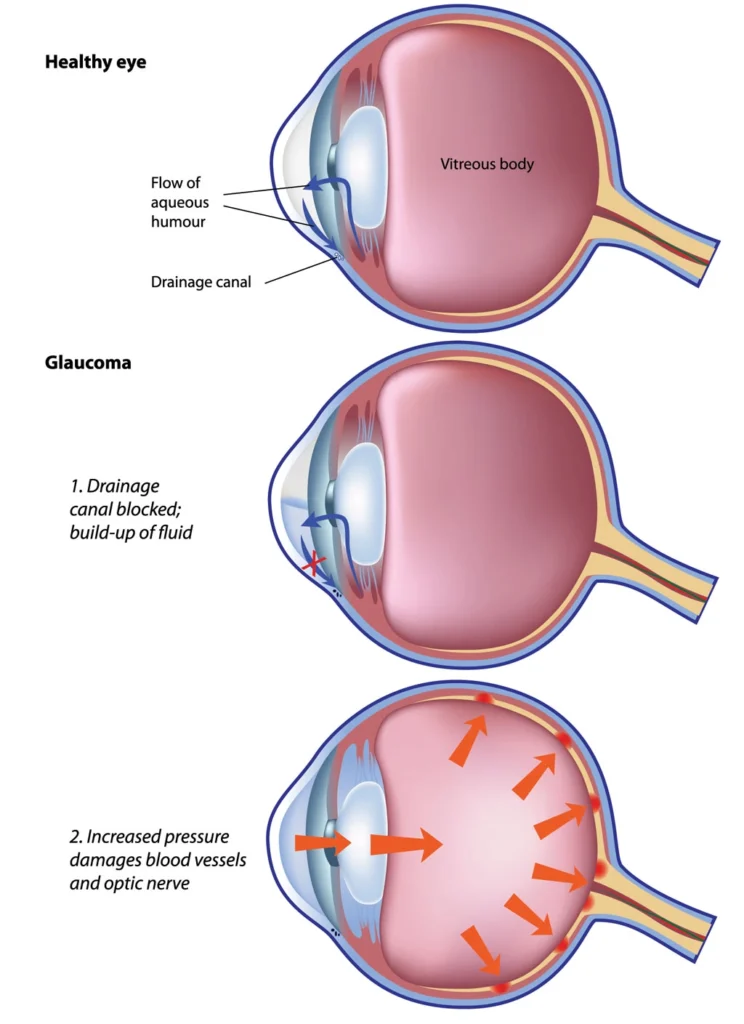
OverView
Glaucoma surgery is a treatment option for glaucoma, a group of eye conditions characterized by increased intraocular pressure (IOP) that can lead to optic nerve damage and vision loss. While medications and laser treatments are often the first lines of defense, surgery may be necessary when these options fail to adequately control the IOP.
Types of Glaucoma
Glaucoma is broadly categorized into two types:
Open-Angle Glaucoma:
The most common type, where the drainage angle formed by the cornea and iris remains open, but the trabecular meshwork is partially blocked, leading to gradual pressure buildup.
Angle-Closure Glaucoma:
A less common but more acute condition where the drainage angle is closed, leading to a sudden rise in IOP.
When is Glaucoma Surgery Needed?
Surgery is typically considered when medications and laser treatments fail to sufficiently lower the IOP or if the patient cannot tolerate medications. The goal of glaucoma surgery is to reduce IOP by improving the outflow of aqueous humor (the fluid inside the eye) or decreasing its production.
Types of Glaucoma Surgery
There are several surgical options for treating glaucoma, each tailored to the specific needs of the patient and the type of glaucoma.
Trabeculectomy:
Procedure:
- Trabeculectomy is the most common glaucoma surgery. The surgeon creates a small flap in the sclera (the white part of the eye) and a drainage hole under this flap. A small part of the trabecular meshwork is removed to create a new drainage pathway for the aqueous humor to leave the eye. The fluid drains into a bleb (a small reservoir) formed on the surface of the eye, where it is absorbed by surrounding tissue.
Post-Procedure:
- Patients typically use eye drops to reduce inflammation and prevent infection. Regular follow-ups are necessary to monitor the healing process and ensure that the bleb functions properly.
Benefits:
- Trabeculectomy effectively lowers IOP in many patients and can be performed on an outpatient basis.
Risks:
- Potential risks include infection, bleeding, cataract formation, and scarring that can cause the bleb to fail.
Glaucoma Drainage Implants:
Procedure:
- Also known as shunt surgery, this procedure involves implanting a small drainage device (such as a tube or valve) in the eye. The device diverts the aqueous humor from inside the eye to an external reservoir, where it is absorbed by surrounding tissue.
Types of Implants:
- Common devices include the Ahmed, Baerveldt, and Molteno implants, each designed to regulate the flow of aqueous humor and reduce IOP.
Post-Procedure:
- Post-operative care includes the use of eye drops to prevent infection and control inflammation. Regular monitoring is required to ensure the implant is functioning correctly.
Benefits:
- Implants are often used in patients with more advanced or complicated glaucoma cases or when previous surgeries have failed.
Risks:
- Risks include infection, bleeding, over- or under-drainage of fluid, and potential damage to the cornea.
Minimally Invasive Glaucoma Surgery (MIGS):
Procedure:
- MIGS procedures are less invasive than traditional surgeries, with the goal of lowering IOP while minimizing complications and recovery time. MIGS includes a variety of techniques, such as inserting tiny stents or micro shunts to improve fluid outflow or using laser treatments to reduce fluid production.
Common MIGS Procedures:
– iStent:
- A tiny stent is implanted into the trabecular meshwork to enhance fluid drainage.
– XEN Gel Stent:
- A soft gel stent is implanted to create a new drainage pathway.
– Trabectome:
- A device is used to remove a small section of the trabecular meshwork to improve outflow.
Post-Procedure:
- Recovery is generally quicker with MIGS, and the procedures are often performed in conjunction with cataract surgery.
Benefits:
- MIGS offers a safer alternative to traditional surgery with fewer risks and faster recovery.
Risks:
- As with all surgeries, there are risks, including device failure or need for additional surgery.
Laser Surgery:
Laser Trabeculoplasty:
- Often used for open-angle glaucoma, this procedure uses a laser to improve the drainage of fluid from the eye. It can be an alternative to traditional surgery or used in conjunction with other treatments.
Laser Iridotomy:
- Typically used for angle-closure glaucoma, this procedure involves creating a small hole in the iris to allow fluid to flow more freely.
Laser Cyclophotocoagulation:
- This procedure uses a laser to target and reduce the production of aqueous humor by the ciliary body, the part of the eye that produces the fluid.
Post-Procedure:
- Patients may require additional eye drops and follow-up visits to ensure IOP remains controlled.
Benefits:
- Laser surgeries are less invasive than traditional surgeries and can be done in an outpatient setting.
Risks:
- Possible risks include inflammation, temporary increase in IOP, and, in rare cases, further damage to the eye.
Recovery and Follow-Up
Recovery:
- The recovery time and care depend on the type of surgery performed. Patients generally need to avoid strenuous activities, heavy lifting, and bending over for a few weeks to prevent complications.
Eye Drops:
- Post-operative care usually includes antibiotic and anti-inflammatory eye drops to prevent infection and control inflammation.
Follow-Up:
- Regular follow-up visits are crucial to monitor IOP, ensure proper healing, and detect any potential complications early.
Risks and Complications
While glaucoma surgery is often necessary to prevent vision loss, it carries potential risks, including:
- Infection
- Bleeding
- Scarring, which can lead to surgical failure
- Cataract formation, particularly after trabeculectomy
- Vision loss in rare cases
- Hypotony (excessively low eye pressure)
Conclusion
Glaucoma surgery is an essential option for managing and controlling intraocular pressure in patients where other treatments are ineffective. Advances in surgical techniques, including the development of MIGS, have provided safer and more effective options for patients, helping to preserve vision and improve quality of life. Successful glaucoma surgery requires careful pre-operative evaluation, precise surgical technique, and diligent post-operative care.

QUICK LINKS
USEFUL LINKS
SANKALP HOSPITALS PVT. LTD.
Vijay Smruti, Town Hall Circle, Jamnagar - 361 001 (Gujarat) INDIA
sankalphospitals@gmail.com
0288 2553435
© 2024 Sankalp Hospitals Pvt. Ltd.